Book Appointment Now
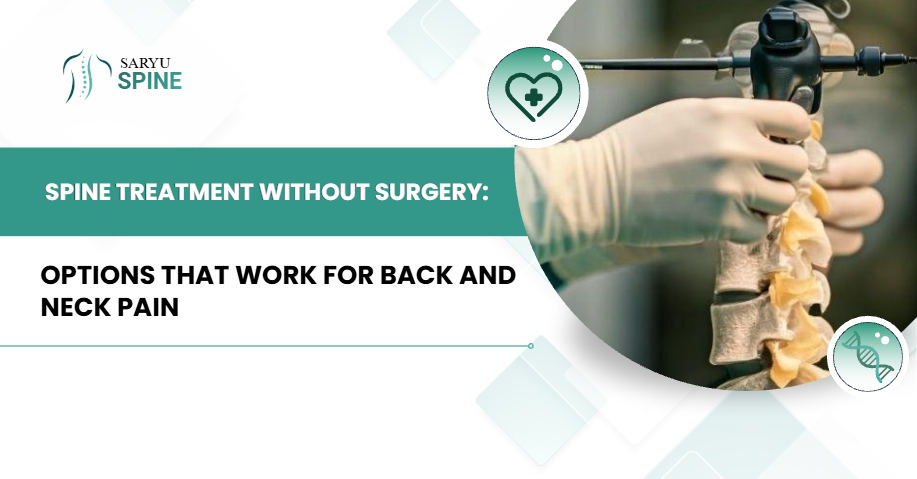
Spine Treatment Without Surgery: Options That Work for Back and Neck Pain
spine treatment without surgery works for the majority of people with back pain, neck pain, sciatica, slipped disc and spinal wear and tear. A combination of physiotherapy, targeted exercises, medicines, posture correction, weight management and, in selected cases, image-guided injections helps most patients recover well or at least control their symptoms. Surgery is needed only for a smaller group, mainly those with progressive weakness, severe nerve or spinal cord compression, instability or pain that does not respond to proper care.
If someone has told you that you need an operation, or you are afraid that you might, this guide to spine treatment without surgery will help you understand the options available, which condition responds to what, how long to try them and which warning signs mean you should not wait.
This article by Dr. Sameer Nagpal is an overview. For each condition, we have linked a detailed guide.
Written and medically reviewed by Dr. Sameer Nagpal, Spine Surgeon. Last updated: October 2026.
Key Takeaways
- Spine treatment without surgery helps most patients, often within weeks to a few months.
- The foundation is active rehabilitation: movement, strengthening and posture, not just rest and painkillers.
- Injections can help selected patients, but they do not cure the underlying problem.
- A scan finding alone does not decide treatment. Your symptoms and examination matter more.
- Bladder or bowel changes, saddle numbness, sudden weakness and back pain with fever or weight loss need urgent evaluation.
Why Most Spine Problems Respond to Spine Treatment Without Surgery
The spine is built to heal and adapt. Muscle strains settle, inflamed nerves calm down and many herniated discs shrink over time. Clinical experience shows that a large share of patients with back or neck pain, and even those with nerve-related leg or arm pain, improve with conservative care.
Surgery has a role, and it can be very effective when it is truly indicated. The goal of a good spine specialist is to recommend surgery only when it is likely to help you more than spine treatment without surgery would.
Spine Treatment Without Surgery: 10 Options That Work
1. Staying gently active
Complete bed rest for long periods can stiffen the spine and weaken muscles. In most cases, short rest during severe pain followed by light walking and normal daily activity, as tolerated, supports recovery. Avoid activities that clearly worsen your symptoms, and return gradually.
2. Physiotherapy
This is the cornerstone of spine treatment without surgery. A good programme is tailored to your diagnosis and usually includes:
- Pain relief techniques such as heat, cold or electrical stimulation, when appropriate
- Mobility and stretching exercises
- Core, back and neck strengthening
- Posture and movement training
- Education on safe lifting, sitting and sleeping
Physiotherapy not only relieves pain, it also lowers the chance of recurrence.
3. Medicines
Doctors may prescribe pain relievers, anti-inflammatory medicines, muscle relaxants and medicines for nerve pain. These are for short-term relief so that you can move and exercise. Take them only under medical advice, especially if you have acidity, kidney disease, heart disease or high blood pressure.
4. Heat and cold therapy
Cold packs can ease acute pain and swelling, while heat relaxes tight muscles. Use a cloth barrier and limit sessions to about 15 to 20 minutes.
5. Posture and ergonomic correction
Daily habits strongly affect the spine. Helpful changes include:
- Keeping your screen at eye level and holding your phone higher instead of bending your neck
- Using a chair with lumbar support with your feet flat on the floor
- Standing and walking every 30 to 45 minutes during desk work
- Sleeping on a supportive mattress, with a pillow under the knees (on your back) or between the knees (on your side)
- Lifting with your knees, not your back
6. Weight management and general fitness
Excess body weight increases load on the lower spine. Even modest weight loss, along with regular low-impact exercise such as walking, swimming or cycling, can reduce pain and improve function.
7. Image-guided injections
When pain is severe and does not settle with medicines and physiotherapy, injections may help selected patients:
- Epidural steroid injection: places anti-inflammatory medicine near an irritated nerve root, mainly for leg or arm pain from a slipped disc or narrowing
- Facet joint injection or medial branch block: for pain from the small spinal joints
- Sacroiliac joint injection: for pain from the joint at the base of the spine
Injections can reduce inflammation and pain for weeks to months and give a window for more comfortable rehabilitation. They do not remove a disc herniation or widen a narrowed canal. Your spine specialist decides whether you are a suitable candidate.
8. Bracing and supports
A brace or collar may be used for a short period in specific situations, such as certain fractures or a severe neck flare. Long-term use weakens muscles, so use it only as advised.
9. Stress, sleep and lifestyle
Poor sleep, stress and smoking make pain worse and slow healing. Better sleep habits, relaxation, quitting tobacco and staying active are part of treatment.
10. Yoga and stretching
Gentle, supervised yoga or stretching helps many people with chronic back or neck pain, but the wrong pose can aggravate certain problems. Get assessed first, especially with a slipped disc, stenosis, instability or osteoporosis. Avoid forceful spinal manipulation or neck cracking, which can be unsafe when nerves or the spinal cord are compressed.
Spine Treatment Without Surgery by Condition
| Condition | Usual non-surgical approach | Detailed guide |
|---|---|---|
| Slip disc (herniated disc) | Short rest, medicines, physiotherapy, posture correction, injection in selected cases | Slip disc treatment without surgery |
| Sciatica | Activity, physiotherapy, nerve pain medicines, injections if severe | Sciatica treatment in India |
| Cervical spondylosis (neck) | Neck mobility and strengthening, posture, short-term medicines | Cervical spondylosis treatment |
| Lumbar canal stenosis | Flexion-based exercises, walking in intervals, injections | Lumbar canal stenosis treatment |
| Spondylolisthesis (slipped vertebra) | Core stabilisation, activity modification, bracing in some cases | Spondylolisthesis treatment |
| Mechanical or muscular back pain | Staying active, physiotherapy, posture, short-term medicines | This guide |
| Text neck and desk-job neck pain | Ergonomics, strengthening, regular breaks | This guide |
How Long Should You Try Spine Treatment Without Surgery?
Timelines depend on the condition:
- Acute muscular back pain: often improves within days to a few weeks
- Nerve-related pain (sciatica, arm pain): often improves over 6 to 12 weeks
- Chronic or degenerative conditions (stenosis, spondylosis): may need 3 to 6 months of a structured programme, plus ongoing exercises
If there is no meaningful improvement after about 6 to 12 weeks of proper spine treatment without surgery, or if symptoms worsen at any stage, review with a spine specialist is important.
When Spine Treatment Without Surgery Is Not Enough
Surgery or further evaluation should be discussed if:
- Severe pain persists despite proper treatment for the expected period
- There is progressive weakness, foot drop or dropping objects
- Pain badly affects work, sleep and daily life
- Imaging shows significant nerve or spinal cord compression that matches your symptoms
- There is instability or a significant slip of a vertebra
- You have difficulty walking or clumsy hands, which may suggest spinal cord compression in the neck
Emergency warning signs: do not wait
Go to a hospital immediately if back pain comes with:
- Loss of bladder or bowel control
- Numbness in the groin or inner thighs (saddle area)
- Sudden weakness in one or both legs
- Fever or chills with severe back pain
- Back pain after a significant fall or accident
Also seek prompt evaluation for unexplained weight loss, night pain that does not ease with rest, or back pain with a history of cancer. Read the full list in our guide on back pain red flag symptoms.
When Surgery Is the Right Choice
Surgery is not a failure of treatment. For some conditions it is the best and safest option, for example cauda equina syndrome, progressive neurological weakness, significant spinal cord compression, unstable fractures or slips, and severe pain with clear nerve compression that has not responded to proper care.
If surgery is advised, there are several approaches today, from traditional open surgery to less invasive techniques. You can read about them in our guides on minimally invasive spine surgery in India, endoscopic spine surgery in India and spinal fusion surgery recovery time. If you want a second opinion on whether you really need surgery, consult an experienced spine surgeon in India.
Myths and Facts About Spine Treatment Without Surgery
Myth: If my MRI shows a slipped disc or degeneration, I will need surgery.
Fact: Many people with MRI changes have no symptoms or improve without surgery. Treatment depends on symptoms and examination.
Myth: Complete bed rest is the best treatment.
Fact: Prolonged bed rest can slow recovery. Gentle activity is usually better.
Myth: Painkillers alone can fix a spine problem.
Fact: Medicines reduce pain, but lasting improvement needs exercise, posture correction and lifestyle changes.
Myth: Injections are a permanent cure.
Fact: They reduce inflammation for a period but do not remove the structural cause.
Myth: Any back exercise or yoga pose is good.
Fact: The wrong movement can worsen some conditions. Get assessed first.
Myth: Spine treatment without surgery means avoiding the real treatment.
Fact: For most patients, spine treatment without surgery is the real treatment.
How to Prevent Spine Problems and Recurrence
- Keep your core, back and neck muscles strong
- Stay active daily, with walking as a base
- Maintain a healthy weight
- Avoid prolonged sitting and set reminders to move
- Practise good posture with phones, laptops and while driving
- Quit smoking
- Lift correctly and avoid sudden twisting under load
- Get adequate calcium, vitamin D and protein
- Do not ignore recurrent or persistent pain
Questions to Ask Your Doctor
- What is my exact diagnosis, and how serious is it?
- Do I need an MRI or other tests now?
- Is spine treatment without surgery suitable for my condition?
- Which exercises are safe, and which should I avoid?
- How long should I try non-surgical treatment before reassessing?
- Would an injection help me, and what are its limits?
- Which symptoms should make me contact you urgently?
Carry your previous reports, scans and medicine list.
Conclusion
Spine treatment without surgery is the right first step for most people with back and neck problems. With an accurate diagnosis, a guided exercise programme, sensible use of medicines, posture and lifestyle changes and, when needed, injections, many people recover well and stay active. The key is to understand your condition, follow a plan suited to you and recognise the warning signs that need prompt action.
If your pain is not improving, or you have been told you need surgery and want to understand your options, book a consultation with Dr. Sameer Nagpal for a personalised evaluation and a plan that matches your condition.
Frequently Asked Questions
1. Can spine problems be treated without surgery?
Yes. Most back pain, neck pain, sciatica and slipped disc cases improve with physiotherapy, medicines, posture correction and lifestyle changes. Surgery is for specific situations.
2. What is the best non-surgical treatment for back pain?
A structured combination of staying active, physiotherapy, targeted exercises, short-term medicines and posture correction usually works best. The right mix depends on the cause.
3. Can a slipped disc heal without surgery?
In many patients, symptoms settle and the herniated portion shrinks over time. Learn more in our guide on slip disc treatment without surgery.
4. How long does non-surgical treatment take to work?
Many people improve within weeks, and nerve-related problems often take 6 to 12 weeks or longer. Chronic conditions need ongoing exercises.
5. Are epidural injections safe?
When done by an experienced specialist with image guidance in suitable patients, they are generally safe, but they carry small risks such as infection, bleeding, temporary pain or rare nerve complications. Your doctor will explain them.
6. Do injections cure spine problems?
No. They reduce inflammation and pain for a period and help with rehabilitation, but do not repair the structural problem.
7. Is physiotherapy enough for spinal stenosis?
It helps many patients with mild to moderate stenosis. Severe or worsening cases may need other treatments, including surgery.
8. Is yoga good for back pain?
Gentle, supervised yoga helps many people, but the wrong poses can worsen certain conditions. Get assessed before starting.
9. Can I avoid surgery for sciatica?
Most people with sciatica improve without surgery. Surgery is considered for severe, persistent or progressive cases.
10. When should I stop non-surgical treatment and consider surgery?
When pain persists despite proper treatment, when weakness progresses, when scans show significant compression matching your symptoms, or immediately if emergency signs appear.
11. Is bed rest good for back pain?
Short rest during severe pain is fine, but prolonged bed rest usually delays recovery. Gentle activity is generally better.
12. Which doctor should I see for a spine problem?
A spine surgeon, orthopaedic spine specialist, neurosurgeon, physiatrist or a doctor experienced in spine care can evaluate you. For nerve or cord symptoms, see a spine specialist.
Conclusion
Most spine problems can be treated without surgery. With an accurate diagnosis, a guided exercise programme, sensible use of medicines, posture and lifestyle changes and, when needed, injections, many people recover well and stay active. The key is to understand your condition, follow a plan suited to you and recognise the warning signs that need prompt action.
If your pain is not improving, or you have been told you need surgery and want to understand your options, book a consultation with Dr. Sameer Nagpal for a personalised evaluation and a treatment plan that matches your condition.
Related reading