
Book Appointment Now
Spine Surgery in Hisar: Cost, Procedures & Recovery — Everything You Need to Know
If back pain has started dictating your day — how you sit, how you sleep, whether you can pick up your child or finish a full day at work — you already know it’s more than “just a strain.” For thousands of people across Hisar and the surrounding districts, this is where the search usually begins: Do I actually need surgery? What will it cost? And who can I trust to tell me the truth, not just sell me an operation?
This guide is written to answer exactly that clearly, honestly, and without the sales pitch. It’s based on how Dr. Sameer Nagpal, an exclusive, fellowship-trained spine surgeon at Saryu Spine Care, Hisar, actually assesses patients before ever recommending surgery.
When Does Spine Surgery Actually Become Necessary?
Here’s the truth most people aren’t told upfront: the vast majority of back and neck pain does not require surgery. Medication, physiotherapy, activity changes, and targeted injections resolve most cases. Surgery enters the picture only when conservative treatment has genuinely been given a fair trial and hasn’t worked — or when certain red-flag symptoms appear:
- Sharp, radiating pain down the arm or leg (classic sciatica pattern)
- Numbness, tingling, or progressive weakness in a limb
- Difficulty walking, a change in balance, or dragging of the foot
- Loss of bladder or bowel control — a medical emergency requiring immediate attention
- Chronic neck or lower back pain that keeps returning despite months of treatment
Every patient at Saryu Spine Care goes through a thorough clinical examination plus imaging (MRI, X-ray, or CT where needed) before any surgical conversation happens. Dr. Nagpal’s philosophy is deliberately conservative-first — a large share of patients who walk in expecting to hear “you need an operation” leave instead with a non-surgical recovery plan.
Spine Surgery Options Available in Hisar
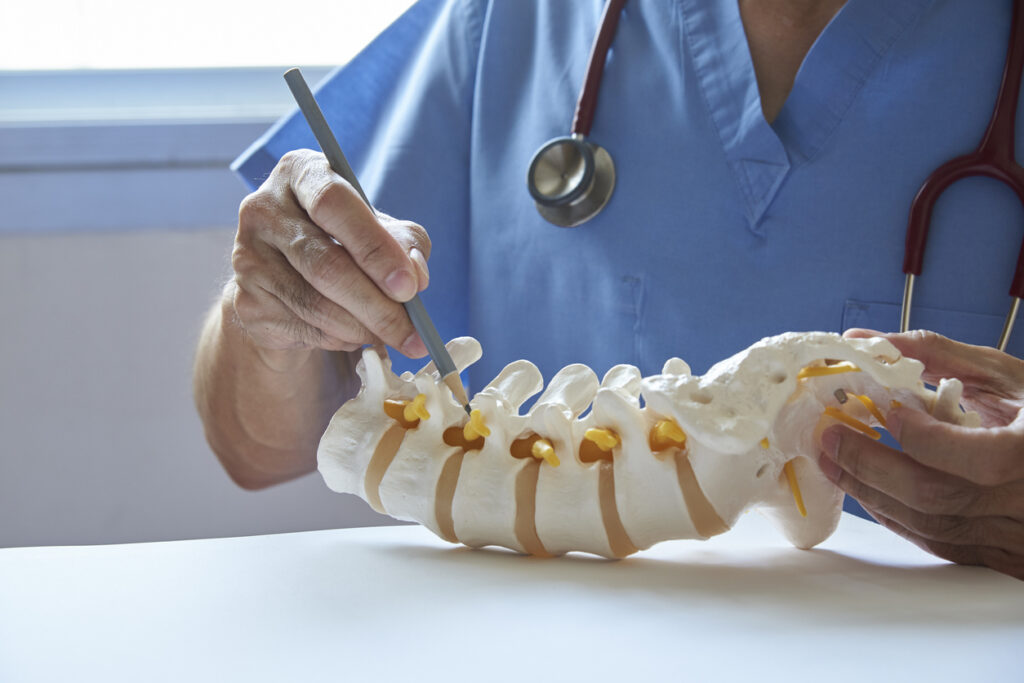
Saryu Spine Care is built around one specialization only — the spine — with a strong emphasis on endoscopic and minimally invasive techniques that reduce pain, blood loss, and recovery time compared to conventional open surgery.
Endoscopic Spine Surgery: The most advanced option available today. A high-definition camera and micro-instruments are guided through a keyhole-sized incision to treat disc herniation and nerve compression — with minimal muscle disruption and a dramatically shorter recovery window. This is Dr. Nagpal’s core area of fellowship training.
Discectomy: Removes the damaged portion of a herniated disc pressing on a spinal nerve — the go-to procedure for patients with radiating leg pain, tingling, or numbness that hasn’t responded to conservative care.
Laminectomy: Relieves pressure on the spinal cord or nerve roots caused by spinal stenosis — recommended for patients experiencing leg heaviness, difficulty walking longer distances, or persistent lower back pain.
Spinal Fusion: Used for spinal instability, advanced degenerative disc disease, or spondylolisthesis, where two or more vertebrae need permanent stabilization to restore structural strength.
Cervical & Lumbar Spine Surgery: Nerve compression in the neck is treated through cervical procedures, while degenerative or unstable conditions in the lower back are managed through lumbar spine surgery — with minimally invasive methods used wherever clinically suitable.
What Actually Sets Saryu Spine Care Apart in Hisar
A Surgeon Who Only Does Spine Dr. Sameer Nagpal isn’t a general orthopedic surgeon who occasionally handles spine cases — spine is the only thing he does. He holds the ASSI Spine Fellowship and completed the FISS Fellowship in Tokyo, one of the most rigorous endoscopic spine training programs in the world, on top of 10+ advanced training credentials.
Real Volume, Real Experience 2,500+ spine surgeries. 1,500+ endoscopic procedures. That’s not a marketing number — it’s the kind of surgical volume that translates directly into precision, fewer complications, and faster recovery for patients.
Surgery Recommended Only When It’s Truly Needed No pressure, no upselling. Every patient gets an honest breakdown of surgical and non-surgical options before any decision is made — which is exactly why patients travel from across Haryana specifically to get a second opinion here.
Care That Follows You, Not the Other Way Around Beyond the main Hisar clinic, Saryu Spine Care runs regular OPDs in Tohana, Sirsa, Fatehabad, Bhiwani, and Hansi — so follow-up care doesn’t mean another long trip to the city.
Spine Surgery Cost in Hisar
There’s no single fixed number for spine surgery — and any clinic that quotes one before examining you should raise a flag. Cost genuinely depends on:
- The specific procedure (endoscopic, discectomy, laminectomy, or fusion)
- Severity and complexity of the underlying condition
- Length of hospital stay required
- Pre-surgical diagnostics and workup
- Post-operative rehabilitation and physiotherapy needs
What can be said with confidence: endoscopic and minimally invasive procedures typically mean smaller incisions, shorter hospital stays, and faster return to work — which often makes them more cost-effective overall than traditional open surgery, even when the upfront procedure cost looks similar. And compared to Delhi, Gurgaon, or Chandigarh, patients in Hisar get the same fellowship-level surgical standard at a fraction of the metro-city price.
Saryu Spine Care provides a clear, itemized cost estimate only after an in-person consultation and diagnosis — no vague ranges, no hidden charges, no surprises at billing.
Recovery After Spine Surgery
This is where minimally invasive and endoscopic techniques make the biggest real-world difference. Because the incision is small and muscle tissue is barely disturbed, most patients experience:
- Walking within a day or two of surgery
- A hospital stay measured in days, not weeks
- Noticeably less post-operative pain than open surgery
- Return to routine activity within 2–4 weeks, depending on the procedure
But recovery isn’t just about the surgery it’s what happens after. Saryu Spine Care builds a structured, individualized rehabilitation plan for every patient, covering posture correction, guided physiotherapy, and long-term spine-care habits designed to prevent the problem from coming back.
The Bottom Line
Spine pain rarely gets better by ignoring it — but that doesn’t mean the answer is automatically surgery either. What actually matters is getting evaluated by someone who specializes only in the spine, is honest about when surgery is (and isn’t) necessary, and has the fellowship training and surgical volume to back it up. That’s the standard Dr. Sameer Nagpal and Saryu Spine Care hold themselves to, right here in Hisar.
If back pain, neck pain, or nerve-related symptoms have started affecting your daily life, don’t wait for it to get worse. Book a consultation with Saryu Spine Care today and get a straight answer on what’s actually going on — and what to do about it.
Frequently Asked Questions (FAQs)
1. How do I know if I need spine surgery?
Surgery is usually considered only after conservative treatments — medication, physiotherapy, injections — haven’t provided relief, or if there are signs of nerve damage such as numbness, weakness, or loss of bladder/bowel control. Dr. Sameer Nagpal conducts a complete clinical evaluation before recommending surgery.
2. What is the cost of spine surgery in Hisar?
Cost depends on the type of procedure, severity of the condition, hospital stay duration, and rehabilitation needs. Endoscopic and minimally invasive procedures are often more cost-effective overall due to shorter recovery. An accurate, itemized estimate is only given after an in-person consultation and diagnosis.
3. What’s the difference between endoscopic and open spine surgery?
Endoscopic spine surgery uses a tiny camera and specialized instruments through a keyhole incision, resulting in less pain, minimal blood loss, and significantly faster recovery. Open surgery involves a larger incision and generally means a longer hospital stay and recovery period.
4. How long does recovery take after spine surgery?
Most patients undergoing minimally invasive or endoscopic surgery are walking within a day or two and return to routine activities within 2–4 weeks. Full recovery time varies based on the specific procedure and the patient’s overall health.
5. Do you treat spine problems without surgery?
Yes — and it’s more common than people expect. A large share of patients improve fully with non-surgical care: medication, physiotherapy, lifestyle adjustments, and targeted pain-management procedures. Surgery is recommended only when it’s genuinely necessary after a thorough evaluation.
[…] Transparent about cost and recovery. See our guide on spine surgery in Hisar: cost, procedures and recovery. […]