Book Appointment Now
Best Orthopedic Doctor in Hisar for Back, Neck & Spine Pain: The Complete 2026 Guide
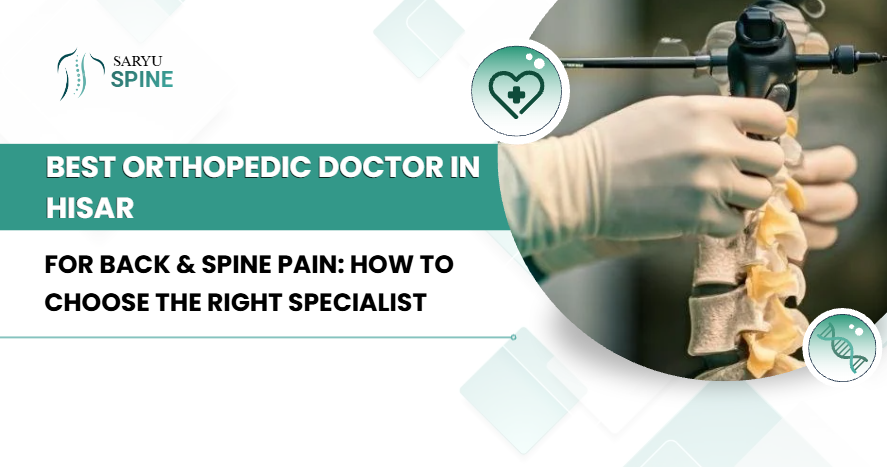
If you are searching for the best orthopedic doctor in Hisar because of back pain, neck pain, a slipped disc or pain travelling down your leg, you have probably noticed one thing: the results are a confusing mix of general orthopedic surgeons, joint replacement doctors, sports injury clinics and a few spine experts. Choosing the wrong kind of orthopedic doctor can mean months of the wrong treatment.
This guide explains the different types of orthopedic doctors in Hisar, which one to see for which problem, the warning signs you should never ignore, how spine problems are diagnosed and treated, and how to pick an orthopedic specialist you can trust.
Who Is the Best Orthopedic Doctor in Hisar for Back and Spine Pain?
For back, neck and nerve-related pain, the best orthopedic doctor is one who:
- has spine-specific fellowship training, not only a general orthopedic degree
- performs a high volume of spine procedures every year
- follows a conservative-first approach (surgery only when truly needed)
- uses proper diagnostics (clinical examination plus MRI, CT or X-ray where needed)
- is available for follow-up during recovery
Dr. Sameer Nagpal at Saryu Spine Care is an orthopedic spine specialist in Hisar with the ASSI Spine Fellowship and the FISS endoscopic spine fellowship in Tokyo, and more than 2,500 spine surgeries performed, including 1,500+ endoscopic procedures. His practice is focused only on the spine.
Types of Orthopedic Doctors in Hisar: Which One Do You Need?
“Orthopedic doctor” is a broad term. Here is how the specialties differ:
| Type of doctor | Best for | Common problems |
|---|---|---|
| General orthopedic surgeon | Bones, fractures and general joint problems | Fractures, trauma, arthritis, general joint pain |
| Joint replacement surgeon | Worn-out knees and hips | Knee replacement, hip replacement |
| Sports injury / arthroscopy specialist | Ligament and cartilage injuries | ACL tear, meniscus tear, shoulder injuries |
| Orthopedic spine specialist | Back, neck and spinal nerve problems | Slipped disc, sciatica, spinal stenosis, cervical spondylosis, spinal instability |
| Physiotherapist | Rehabilitation and exercise therapy | Recovery after treatment, posture and strengthening |
A surgeon who is excellent at knee replacements is not automatically the best choice for a herniated disc. Spine surgery, especially endoscopic and minimally invasive techniques, has a steep learning curve, and results are closely linked to how many spine procedures the surgeon performs.
When Should You See an Orthopedic Doctor for Back or Neck Pain?
Most short episodes of back pain settle with rest, gentle movement and basic medication. See an orthopedic or spine specialist if:
- pain has lasted more than 4 to 6 weeks
- pain travels down the leg or arm (sciatica or radiculopathy)
- you have numbness, tingling or weakness in the hands, arms, legs or feet
- pain is worse at night or does not ease with rest
- pain keeps coming back or limits sitting, walking, sleeping or work
- previous treatment or physiotherapy has not helped
Warning signs that need urgent care
Go to a hospital emergency department or contact a spine specialist immediately if you have:
- loss of control of urine or stools
- numbness around the groin or inner thighs
- rapidly worsening weakness in a leg or foot
- severe back pain after a fall or accident
- back pain with fever, unexplained weight loss or a history of cancer
These can signal serious nerve compression or another urgent condition and should not wait for a routine appointment.
What Causes Back and Neck Pain? (And Why the Cause Decides the Treatment)
The right treatment depends on the source of the pain, which is why a proper diagnosis matters more than the name of the doctor. The most common causes seen by orthopedic spine specialists are:
- Muscle and ligament strain: from heavy lifting, sudden movements or long hours of poor posture. Usually settles in a few weeks.
- Disc problems: a bulging or herniated disc can press on a spinal nerve and cause pain in the leg or arm.
- Degenerative changes: age-related wear of discs and joints (spondylosis, disc degeneration, facet joint arthritis).
- Spinal canal narrowing (stenosis): causes leg pain, heaviness or tingling that appears while walking and eases on sitting or bending forward.
- Spinal instability or slipped vertebra: one vertebra moves over the next (spondylolisthesis).
- Poor posture and sedentary work: long hours at a desk, driving or mobile use, a very common cause of neck and upper back pain.
- Injury and fractures: after a fall, accident or in people with weak bones (osteoporosis).
- Less common causes: infection, tumours or inflammatory conditions, which is why warning signs such as fever, weight loss or night pain should always be checked.
Common Myths About Back and Spine Pain
| Myth | The facts |
|---|---|
| Back pain always means you need surgery | Most back and disc problems improve with non-surgical care. Surgery is for a minority with clear indications. |
| Complete bed rest is the best cure | Long bed rest usually slows recovery. Gentle movement, as advised by your doctor, generally helps more. |
| A scary MRI report means a serious problem | Many people have disc bulges or degeneration on MRI without any pain. Treatment is based on symptoms and examination, not the report alone. |
| Spine surgery always means a long hospital stay and a big cut | Minimally invasive and endoscopic techniques can be suitable for some conditions, with small incisions. Suitability depends on the diagnosis. |
| Cracking or manipulating the back by an untrained person is harmless | Forceful manipulation without a diagnosis can worsen a disc or nerve problem. Get examined first. |
| Only older people get spine problems | Slipped discs and posture-related neck pain are common in people in their 20s, 30s and 40s too. |
How to Choose the Right Orthopedic Doctor in Hisar: A 7-Point Checklist
- Spine-specific training. Look for recognised spine fellowships such as the ASSI Spine Fellowship or international endoscopic spine training.
- Surgical volume in spine procedures. Ask how many spine surgeries, and how many minimally invasive or endoscopic procedures, the surgeon has performed.
- Conservative-first philosophy. A good specialist tries medication, physiotherapy and injections first. If surgery is pushed at the very first visit, take a second opinion.
- Clear diagnosis. Your doctor should examine you thoroughly and match symptoms to imaging, not just read a report.
- Explains options honestly. You should hear the benefits, risks, recovery time and alternatives of each option.
- Follow-up access. Spine recovery takes weeks to months. Check that follow-ups and rehab guidance are easy, especially if you travel from another town.
- Transparent about cost and recovery. See our guide on spine surgery in Hisar: cost, procedures and recovery.
10 Questions to Ask Any Orthopedic or Spine Doctor Before Treatment
A good doctor welcomes questions. Ask these at your consultation:
- What exactly is the diagnosis, and which scan finding explains my symptoms?
- Do I need surgery now, or can I try non-surgical treatment first?
- If I wait, what is the risk, and what signs would mean I should come back sooner?
- What are all my options, including non-surgical and minimally invasive ones?
- What are the benefits, risks and possible complications of the recommended treatment?
- How many times have you performed this exact procedure?
- What will recovery look like: hospital stay, return to work, driving, exercise?
- What is the expected cost range, and what is included?
- Who will I see for follow-up, and how can I reach the clinic if I have a problem?
- Would you be comfortable if I took a second opinion?
How to Verify an Orthopedic Doctor in Hisar
- Medical registration: check that the doctor is registered with the National Medical Commission (NMC) or the state medical council.
- Degrees and fellowships: ask for the degree (for example MS Orthopedics) and the exact fellowship names, and confirm them with the issuing institution if you want certainty.
- Procedure experience: a surgeon who is proud of their spine experience will tell you how many procedures they do.
- Real patient feedback: read recent Google reviews for patterns (communication, honesty, follow-up), not just the star rating.
- Consistent information: the clinic name, address, phone number and doctor profile should match across the website, Google Maps and directories.
- No pressure: be cautious about packages, urgent discounts or pressure to book surgery on the first visit.
Common Back, Neck and Spine Conditions We Treat in Hisar
Explore all spine conditions and treatments at Saryu Spine Care.
- Slipped (herniated) disc: a disc bulges and presses on a nerve, causing back or neck pain with leg or arm symptoms.
- Sciatica: pain, tingling or numbness travelling from the lower back through the buttock and down the leg.
- Lumbar canal stenosis: narrowing of the spinal canal causing leg pain or heaviness while walking. Read more: lumbar canal stenosis treatment, exercises and when surgery is needed.
- Cervical spondylosis and neck pain: age-related wear of the neck spine. See neck pain causes, relief tips and when to see a spine specialist.
- Chronic lower back pain: persistent pain from disc degeneration, facet joints or muscle and posture problems.
- Spinal instability and degenerative disc disease: where vertebrae slip or discs wear down, sometimes needing fusion. See the spinal fusion recovery week-by-week guide.
How Spine Problems Are Diagnosed
A reliable diagnosis combines three things:
- Detailed history: when pain started, what makes it better or worse, and whether leg or arm symptoms are present.
- Clinical examination: checking posture, movement, muscle strength, reflexes, sensation and tests such as the straight leg raise.
- Imaging when needed: X-ray for alignment and instability, MRI for discs and nerves, and CT in selected cases. Imaging is matched against your symptoms, because many people have disc changes on MRI without any pain.
Not everyone needs an MRI at the first visit. Your doctor will advise which tests are actually useful.
Treatment Options: From Non-Surgical Care to Endoscopic Surgery
Most patients with disc and nerve problems improve without an operation. Treatment usually follows a step-by-step path:
- Medication and activity modification to control pain and inflammation.
- Physiotherapy and exercise to strengthen the core and improve posture.
- Image-guided injections such as epidural or nerve root blocks for stubborn nerve pain.
- Surgery, only when conservative care fails or when there are clear indications such as significant weakness or nerve compression.
When surgery is needed, modern options include microdiscectomy, endoscopic spine surgery (a small keyhole incision, often with less muscle damage and faster return to activity for suitable patients), decompression for stenosis and fusion for instability. Learn more in our guide to minimally invasive spine surgery in India.
Which option suits you depends on your diagnosis, imaging, age, health and goals. This is why a personal evaluation matters more than any online list.
Recovery: What to Expect With and Without Surgery
Recovery varies from person to person. The ranges below are general guidance only, and your surgeon will give you a timeline specific to your condition.
| Treatment | What recovery usually involves |
|---|---|
| Non-surgical care (medicines, physiotherapy, activity changes) | Many people notice improvement over a few weeks. Stubborn nerve pain may need injections or a further review. |
| Image-guided injection | Often a day-care procedure. Relief and rehab plan are explained by your doctor. |
| Endoscopic or microdiscectomy surgery | Short hospital stay for many patients, early walking, gradual return to desk work and then to heavier activity as advised. |
| Decompression for stenosis | Early walking, wound care and physiotherapy. Pace of return to work depends on the job. |
| Spinal fusion | A longer, staged recovery. See our week-by-week spinal fusion recovery guide. |
Following the post-treatment plan (movement, posture, medicines, follow-up visits) matters as much as the procedure itself.
What Decides the Cost of Spine Treatment in Hisar?
No honest doctor can quote an exact figure without examining you, because cost depends on:
- the diagnosis and whether treatment is non-surgical or surgical
- the type of procedure (endoscopic, microscopic, decompression or fusion)
- implants or devices, if required
- hospital room category and length of stay
- investigations such as MRI, CT or X-ray
- anaesthesia, medicines and physiotherapy
- follow-up visits
Ask the clinic for a written estimate of what is included and what is not, and ask whether your health insurance or cashless options can be used. For a detailed breakdown, read our guide to spine surgery in Hisar: cost, procedures and recovery.
Meet Dr. Sameer Nagpal: Orthopedic Spine Specialist in Hisar
Dr. Sameer Nagpal runs Saryu Spine Care, a practice focused exclusively on spine health.
- Exclusive spine focus: spine is the only area he treats
- Training: ASSI Spine Fellowship and the FISS Fellowship in Tokyo, plus 10+ advanced training credentials
- Experience: 2,500+ spine surgeries, including 1,500+ endoscopic procedures
- Approach: conservative-first, with surgery advised only after full evaluation
- Reach: regular OPDs across Haryana
If your problem is a fracture, joint replacement or another general orthopedic condition, a general orthopedic surgeon is the right choice, and we will happily guide you in that direction. For back, neck and spinal nerve problems, a dedicated spine specialist gives you focused expertise. Read more about Dr. Nagpal and Saryu Spine Care.
What to Expect at Your First Consultation
- Bring: all MRI, CT and X-ray films and reports, previous prescriptions, and a short note on when symptoms started and what has helped.
- Discussion: your symptoms, daily activities, work and past treatments.
- Examination: a hands-on neurological and spine examination.
- Plan: a clear explanation of the diagnosis, whether you need further tests, and a treatment plan with non-surgical options first wherever possible.
Self-Care and Prevention While You Wait for Your Appointment
These general measures suit most people with ordinary mechanical back or neck pain. If you have any warning sign listed earlier, skip self-care and get examined.
- Keep moving gently. Short, frequent walks are usually better than lying down all day.
- Avoid heavy lifting and sudden twisting until you have been assessed. When you lift, bend your knees and keep the load close to your body.
- Sit smart. Keep your feet flat, hips and knees at about right angles, and back supported. Stand up and move every 30 to 45 minutes.
- Set up your screen at eye level to reduce neck strain, and avoid long periods looking down at a phone.
- Sleep position. Many people are more comfortable on their side with a pillow between the knees, or on the back with a pillow under the knees.
- Use heat or cold for comfort if it helps. This is symptom relief, not a treatment for the cause.
- Do not self-medicate for long. If you need painkillers regularly, get a diagnosis.
- Stay active over the long term: regular walking, core and back strengthening and a healthy weight lower the chance of recurrence. Avoid smoking, which affects disc and bone health.
Exercises should be started only after a doctor or physiotherapist has checked you, because the wrong exercise can aggravate a disc or nerve problem. See our guide on neck pain relief and when to see a spine specialist.
Should You Take a Second Opinion?
Yes, a second opinion is reasonable, and a good surgeon will not mind. It is especially worth considering if:
- surgery has been advised and you are unsure it is needed
- your symptoms do not match your scan report
- you were not offered any non-surgical option first
- the recommended procedure is major, such as spinal fusion
Bring all your reports, films and previous prescriptions so the second doctor sees the full picture.
Frequently Asked Questions
1. Who is the best orthopedic doctor in Hisar for back pain?
The best choice for back pain is a doctor with spine-specific fellowship training, a high volume of spine procedures and a conservative-first approach. Saryu Spine Care in Hisar, led by Dr. Sameer Nagpal, focuses exclusively on back, neck and spine problems.
2. What is the difference between an orthopedic doctor and a spine specialist?
An orthopedic doctor treats the whole musculoskeletal system, including bones, joints and fractures. A spine specialist focuses only on the discs, nerves and vertebrae. For back, neck or nerve pain, a spine specialist usually offers deeper expertise.
3. Which doctor should I see for a slipped disc or sciatica?
An orthopedic spine specialist. Most slipped discs improve with medication, physiotherapy and sometimes injections, and only a minority need surgery.
4. Does Dr. Sameer Nagpal treat knee, hip or fracture problems?
No. Dr. Nagpal treats only spine conditions. For knee or hip replacement and fractures, you should consult a general orthopedic or joint replacement surgeon.
5. Do I always need surgery if I see a spine surgeon?
No. Many patients recover with non-surgical care. Surgery is advised only when conservative treatment has not worked or when there are clear medical indications.
6. When should I see an orthopedic doctor for back pain?
If pain lasts more than 4 to 6 weeks, spreads to the leg or arm, causes numbness or weakness, or keeps returning. Seek urgent care for loss of bladder or bowel control or rapidly worsening weakness.
7. What is endoscopic spine surgery?
It is a minimally invasive technique performed through a very small incision using a thin camera and instruments. For suitable patients it can mean less tissue damage and a quicker return to routine activities. Whether you are a candidate depends on your diagnosis and scans.
8. Do I need an MRI before my first visit?
Not necessarily. Bring any existing scans, and your doctor will tell you which tests, if any, are needed.
9. Which areas does Saryu Spine Care serve?
Besides Hisar, regular OPDs are held in Tohana, Sirsa, Fatehabad, Bhiwani and Hansi, so patients across Haryana can consult a spine specialist close to home.
10. How much does spine surgery cost in Hisar?
The cost depends on the diagnosis, type of procedure, implants, hospital stay and investigations, so it can only be estimated after examination. Ask for a written estimate that lists what is included. Details are in our spine surgery cost, procedures and recovery guide.
11. How long does recovery take after spine surgery?
It varies with the procedure. Many patients walk the same or next day after minimally invasive surgery, while fusion needs a longer, staged recovery. Your surgeon will give a plan based on your condition. See our spinal fusion recovery guide.
12. Is it safe to exercise with a slipped disc?
Gentle walking is usually encouraged, but specific exercises should be started only after a doctor or physiotherapist has assessed you. The wrong movements can worsen nerve pain.
13. Can sciatica go away without surgery?
Often yes. Many cases improve with medication, physiotherapy and time. Surgery is considered when pain is severe and persistent despite treatment, or when there is significant weakness or nerve compression.
14. Is neck pain also treated by an orthopedic spine specialist?
Yes. Neck pain from cervical spondylosis, disc problems or nerve compression is part of spine care. See neck pain: causes, relief tips and when to see a spine specialist.
15. When can I go back to work or drive after treatment?
It depends on your job, the treatment and how you recover. Desk work usually resumes earlier than heavy physical work. Your surgeon will advise when it is safe to drive and lift.
16. Should I get a second opinion before spine surgery?
Yes, it is reasonable, especially if surgery is advised without trying non-surgical options or if the procedure is major. A good specialist will support it.
17. How do I book an appointment at Saryu Spine Care in Hisar?
Call +91 96717 71319 or use the contact page. OPD timings for each town are listed on the Hisar location page and in the table above.