

Most people deal with back or neck pain at some point in life, and in many cases, it goes away on its own with rest, posture correction, or basic physiotherapy. But some symptoms are your body’s way of telling you that something more serious is going on with your spine and waiting too long can turn a manageable problem into a complicated one.
Here are 5 signs that mean you need to see a spine specialist immediately, not just a general physician.
1. Pain Radiating Down Your Arm or Leg
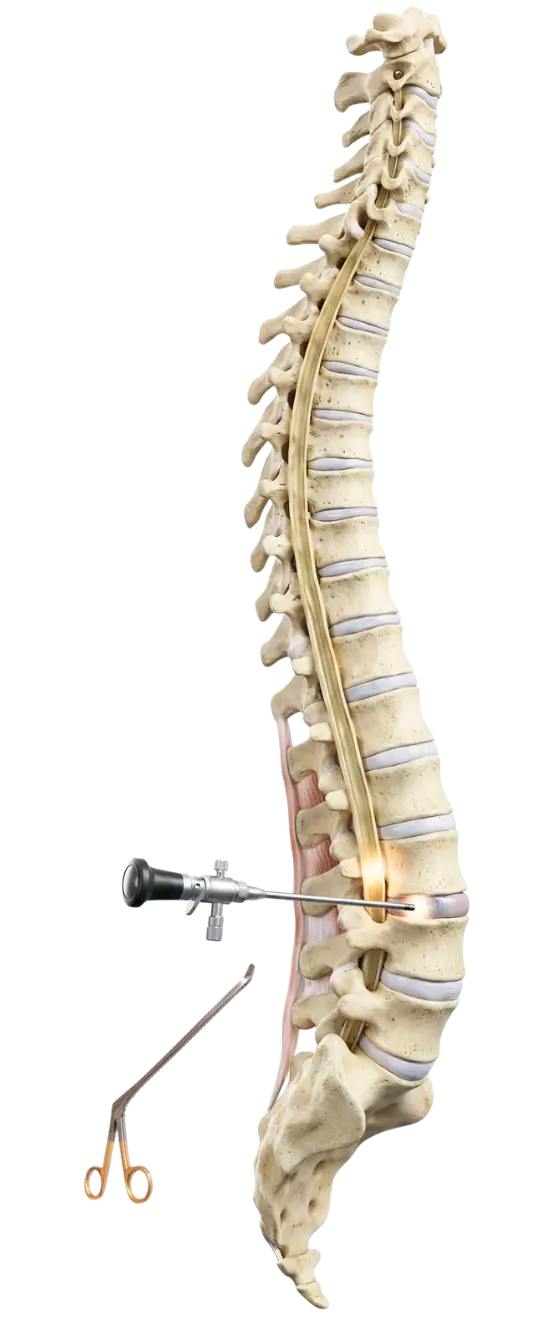
If your back or neck pain isn’t staying in one place and instead travels down your leg (sciatica) or down your arm it usually means a nerve in your spine is being compressed, often by a herniated or slipped disc.
This kind of pain is different from ordinary muscle soreness. It’s often sharp, burning, or shooting, and can get worse when you sit, cough, or bend forward. Left untreated, nerve compression can lead to permanent nerve damage.
Why it matters: Nerve-related pain rarely resolves with rest alone and needs proper diagnosis through clinical examination and imaging (MRI).
2. Numbness, Tingling, or Weakness in Limbs

Occasional pins-and-needles from sitting awkwardly is normal. But persistent numbness, tingling, or muscle weakness in your arms, hands, legs, or feet is a red flag for nerve involvement.
Weakness that makes it hard to grip objects, climb stairs, or lift your foot while walking (known as foot drop) should never be ignored these are signs of significant nerve pressure that may require urgent evaluation.
3. Loss of Bladder or Bowel Control
This is one of the most serious warning signs in spine health and is considered a medical emergency. Sudden loss of bladder or bowel control, along with numbness in the inner thighs or groin area, can indicate a condition called cauda equina syndrome severe compression of the nerves at the base of the spine.
Why it matters: This condition can cause permanent paralysis or loss of bladder/bowel function if not treated surgically within a narrow time window. If you experience this, go to the nearest hospital emergency department immediately — don’t wait for a scheduled appointment.
4. Pain That Doesn’t Improve After 2-3 Weeks
Ordinary muscle strain typically improves within a week or two with rest, hot/cold therapy, and light movement. If your back or neck pain persists beyond 2-3 weeks despite basic home care, or keeps coming back frequently, it’s time to get it properly evaluated.
Chronic, unresolving pain can point to underlying issues like spinal stenosis, disc degeneration, or spinal instability that need targeted treatment rather than generic pain relief.
5. Difficulty Standing Straight or Walking

If you find yourself unable to stand upright without pain, walking with a noticeably altered gait, or needing to bend forward for relief, this may indicate a structural problem in the spine such as a significant disc issue, spinal deformity, or instability.
This is especially important to evaluate in older adults, where spinal stenosis is more common, and in younger patients with spinal deformities like scoliosis.
When Should You See a Spine Specialist vs. a General Doctor?
A general physician or orthopedic doctor is a good starting point for mild, short-term back pain. However, you should specifically consult a spine specialist a surgeon with dedicated fellowship training in spine conditions if you notice:
- Any of the 5 warning signs above
- Pain following an injury, fall, or accident
- No improvement after a few weeks of conservative treatment
- A history of previous spine surgery with new or returning symptoms
A spine specialist can offer accurate diagnosis through proper imaging and a range of treatment options from physiotherapy and pain-block injections to advanced minimally invasive and endoscopic spine surgery matched to the actual cause of your pain, not just the symptoms.
What Happens During a Spine Specialist Consultation?
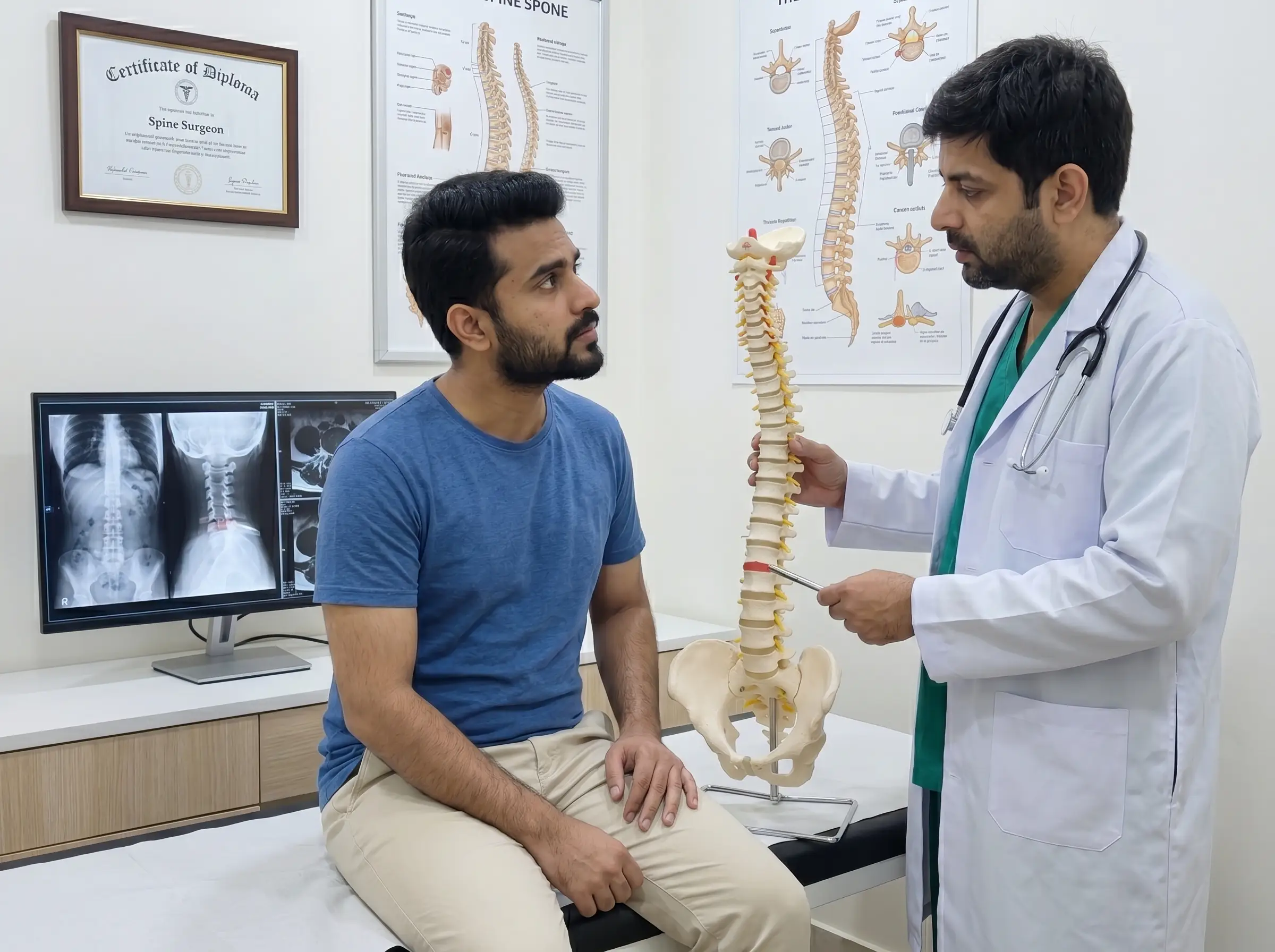
At Saryu Spine Care, Hisar, a typical evaluation with Dr. Sameer Nagpal, a fellowship-trained spine surgeon, includes:
- Detailed history and physical/neurological examination
- Review of existing imaging or referral for MRI/CT if needed
- A clear explanation of the diagnosis and all treatment options surgical and non-surgical
- A personalized treatment plan, prioritizing conservative care wherever appropriate
Final Thoughts
Your spine supports nearly everything you do, and certain symptoms are your body’s early warning system. Radiating pain, numbness or weakness, loss of bladder/bowel control, pain lasting weeks, or trouble standing and walking are all signs that deserve prompt attention from a spine specialist — not delay.
If you are experiencing any of these symptoms, book a consultation with Dr. Sameer Nagpal at Saryu Spine Care, Hisar, for an accurate diagnosis and the right treatment plan.
Frequently Asked Questions
Q1. Is back pain with leg pain always serious?
Not always, but pain radiating down the leg (sciatica) is a sign of nerve involvement and should be evaluated by a specialist rather than ignored, especially if it persists or worsens.
Q2. Can spine problems be treated without surgery?
Yes. Many spine conditions, including early disc issues and muscular back pain, are managed successfully with physiotherapy, medication, and pain-block therapy. Surgery is considered only when conservative treatment doesn’t work or in severe/emergency cases.
Q3. What should I do if I lose bladder control along with back pain?
This is a medical emergency (possible cauda equina syndrome). Go to the nearest hospital emergency room immediately rather than waiting for a regular appointment.
Q4. When should I stop waiting and see a spine specialist?
If pain lasts more than 2-3 weeks, radiates to your limbs, or comes with numbness or weakness, it’s time to consult a spine specialist rather than continuing home remedies.